Home / Buying small quantities in China: how low-MOQ sourcing works at ADC
Buying small quantities in China: how low-MOQ sourcing works at ADC
How to buy small quantities from China: why factories set minimums, which categories suit small orders, and how low-MOQ sourcing works at ADC Shenzhen.

Many overseas buyers want to buy small quantities from China: a new retailer testing a range, a designer furnishing one villa, or a boutique hotel that needs forty chairs, not four thousand. The usual obstacle is the minimum order quantity, or MOQ. This guide explains why factories set minimums, where small orders are realistic, and how low-MOQ sourcing works at ADC Art Design Center in Shenzhen, where many brands sell from a single piece.
What MOQ means and why suppliers set it
The minimum order quantity is the smallest order a supplier will accept for a product. Factories set minimums because every production run has fixed costs: preparing materials, setting up machines, making moulds or patterns, and checking quality. Spread over a large order those costs almost disappear; on a tiny order they can be larger than the product itself.
That is why minimums are often highest for fully custom products made from scratch, and lowest for products a brand already makes, stocks or produces in regular batches. Understanding this difference is the key to buying small: the closer your order is to what a supplier already makes, the smaller it can be.
Why small orders are hard to place in China
Buyers usually meet three problems when they try to order small quantities:
- Factory-scale minimums. Many manufacturers are set up for container-size orders and will not quote for a few pieces, or quote a price that only makes sense at volume.
- Trade fair timing. Fairs are excellent for meeting suppliers, but exhibitors often focus on large buyers, and the fair only runs for a few days.
- Buying from photos. Ordering small quantities online is easy, but it is hard to judge materials, finish and construction from a screen, and a small order does not justify a factory audit.
The result is that small buyers often either over-order to meet a minimum, or take a risk on products they have never seen.
How low-MOQ sourcing works at ADC
ADC opened in 2000 and brings more than 1,600 brands and factory-direct stores together in four halls covering 200,000 square metres. Brands run their own showrooms, with their collections on display, which changes the way small orders work:
- Many brands sell from a single piece. Because brands show and sell existing collections, a first order can be one item, a few pieces or a mixed set, rather than a full production run.
- You see the product before you buy. You can check materials, joints, fabrics and finishes in person, which matters more when you cannot justify a large sample programme.
- You talk to the brand directly. Questions about sizes, colours, packing and shipping go straight to the people who make or supply the product.
- You can mix categories. Furniture, lighting, textiles, tableware and art are in the same campus, so a small order can still furnish a complete room or project.
Every brand sets its own terms. Prices, minimum orders, lead times and payment terms are confirmed directly by each brand, so always ask based on your own quantities.
Who low-MOQ buying suits
Buying small is not only for small businesses. It suits any buyer who needs flexibility more than volume:
- New retailers and online stores testing which styles sell before committing to a full range.
- Established dealers adding a few new designs to an existing line without carrying large stock.
- Interior designers sourcing for one client or one project at a time.
- Boutique hotels, villas and serviced apartments with modest room counts that still need commercial quality.
- Buyers planning to scale, who want to test a supplier’s quality and communication with a small first order.
Categories where small orders work well
Low minimums are common across several of ADC’s collections. Use the collection pages to see brands and showroom locations before you travel:
- Furniture: original-design brands in Phase II often offer custom sizes and low minimum orders. DAaZ makes modular wabi-sabi furniture for young homes, and HIGOLD covers premium outdoor furniture for hotels and villas.
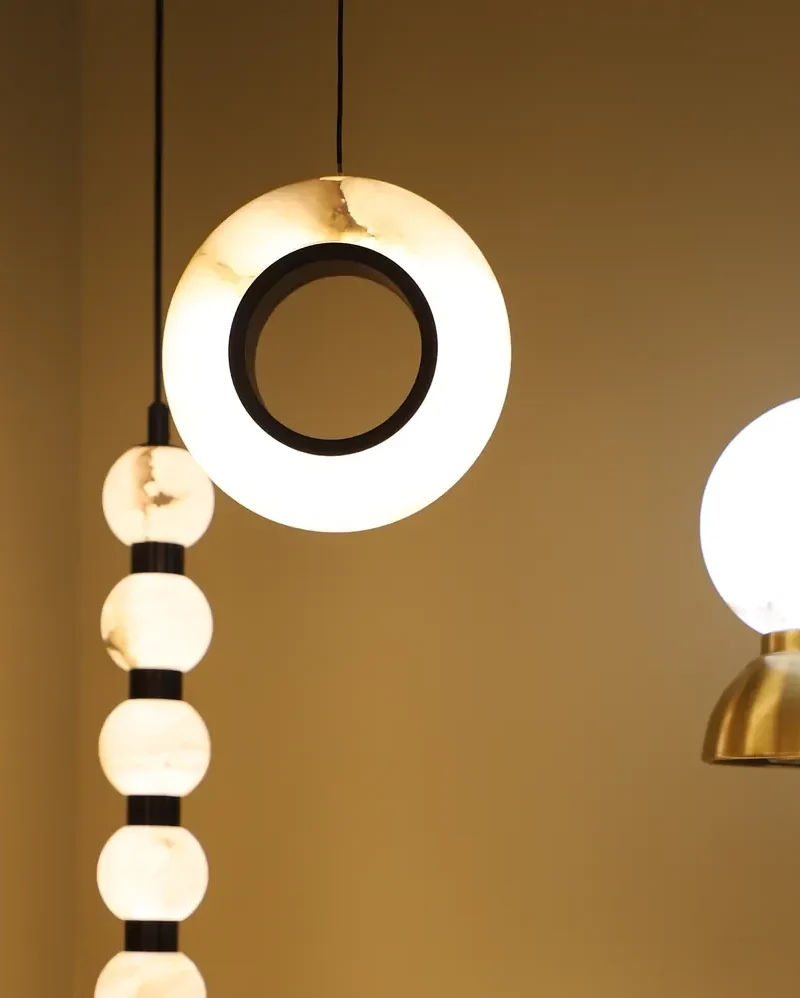
- Lighting: many lighting brands on Phase III floors 3–5 offer OEM, contract-grade fittings, custom sizes and low minimum orders, so you can test a range or specify a whole project.
- Art and sculpture: studios such as Weiya Art can work in custom sizes, which suits one-off pieces for lobbies, villas and commercial spaces.
- Textiles and rugs: fabrics, curtains, carpets and rugs, many available in custom sizes.
- Tableware and ceramics and home accents, useful for completing a room or adding a small giftable range.
How to ask for a small order
Brands are more likely to say yes to a small order when your request is clear. Prepare this before your visit:
- Quantities per item, even if they are rough, and whether you expect repeat orders.
- Photos or references of the styles you want, and room sizes or drawings for project work.
- Your market, so the brand can advise on sizes, plugs, fabrics or standards that apply.
- Timing: when you need the goods delivered and when you would place a larger order.
- Shipping plan: whether you use your own freight forwarder or need the brand to arrange delivery.
Then ask each brand the same questions so you can compare answers:
- Can I order this item as a single piece or in a small quantity?
- Is it in stock, made to order, or made in batches?
- Which details can change (size, colour, fabric, finish), and does that change the minimum?
- How is it packed for export, and can you deliver to my forwarder in Shenzhen?
- What is the lead time for this quantity, and for a larger repeat order?
Costs to plan for when you buy small
Small orders give you flexibility, but they change the cost picture. Plan for these points from the start:
- Unit price. The price per piece is often higher for small quantities than for volume orders, because fixed costs are shared across fewer units. Ask brands for prices at your quantity and at the next level up.
- Shipping. Small orders usually travel as part of a shared container rather than a full one. A freight forwarder can combine goods from several brands into one shipment, which keeps the cost per item down.
- Packaging. Ask how each item is packed, as export packing protects goods on longer journeys and affects shipping volume.
- Customisation. Changes to size or finish can raise the minimum or lengthen the lead time, so decide which changes really matter.
From a trial order to a full range
The best reason to start small is to learn before you scale. A trial order shows you how a product sells, how it arrives, and how a brand communicates when there is a question. If it goes well, your next conversation can be about larger quantities, custom versions or OEM production, and many brands at ADC offer all three.
Keep notes on each brand you visit: what you saw, what you were quoted, and who you spoke to. When you come back for a second visit or a larger order, you will know exactly where to go.
A one-day plan for small-quantity buyers
Here is a simple way to structure a day at ADC if you are buying small:
- Before you go: list your categories, quantities and budget, and message us on WhatsApp with your arrival day so we can suggest the right floors and brands.
- Morning: start with your main category, for most buyers furniture in Phase II, and shortlist brands that accept small orders.
- Lunch: the rooftop food street on the sixth floor of Phase III.
- Afternoon: add lighting, textiles, tableware or art from Phase III and Phase I to complete your order.
- Late afternoon: return to your shortlisted brands to confirm quantities, packing and delivery to your forwarder.
Our team can help with translation during your visit. Use the floor guide to see which hall holds each category, and read Where to buy furniture in Shenzhen for a floor-by-floor guide to Phase II.
Getting to ADC
ADC is at Zhanyi Road, Luohu District, Shenzhen, open every day, 9:30 AM – 7:00 PM. Take Metro Line 7 or 9 to Hongling North Station and use Exit D; the entrance is about 200 metres away. Partner hotels HYATT UrCove and Noah Hotel are both under ten minutes’ walk. If you are in Guangzhou for the Canton Fair, see From Canton Fair to ADC: a one-day Shenzhen sourcing route.
Questions buyers often ask
Can I really buy a single piece?
Many brands at ADC sell from a single piece, especially for items they already have in their collections. Custom or made-to-order items may have a minimum, so confirm with each brand.
Is the price higher for small quantities?
Often, yes. Fixed costs are shared across fewer pieces, so unit prices are usually higher than for volume orders. Ask for prices at your quantity and at larger quantities so you can plan ahead.
Can I combine products from different brands in one shipment?
Yes. Most buyers use a freight forwarder in Shenzhen to collect goods from several suppliers and ship them together. Ask each brand whether they can deliver to your forwarder.
Do I have to visit in person?
A visit lets you check quality and talk to brands directly, which is the main advantage for small orders. If you cannot travel, message us on WhatsApp and we can help you get in touch with the right brands.
Start small, buy with confidence
Low-MOQ sourcing works best when you can see the product, speak to the brand and compare options in one place. Browse the brand directory, check the floor guide and plan your visit. With more than 1,600 brands under one roof, ADC makes it practical to buy small quantities from China and grow from there.